BRAND:
MANULIFE (VIETNAM) LIMITED
AWARD CATEGORY:
The Best Societal Impact Campaign
CAMPAIGN TIME RANGE:
15/11/2025 - 31/12/2025
CREDITS:
DIRTYPAWS
CASE STUDY VIDEO
STRATEGY
Digestive diseases have become a pressing public health challenge in Vietnam. According to medical reports, Helicobacter pylori (H. pylori) infection affects 70–80% of Vietnamese adults and is responsible for nearly 80% of stomach cancer cases, one of the country’s most fatal cancers. Alarmingly, the age of patients is becoming younger, while early screening remains limited due to low awareness and the absence of preventive health-check habits (VnEconomy, 2024). In major cities, rapid urbanisation and work-related stress have further exacerbated digestive disorders, with stress-induced gastritis accounting for over 40% of chronic digestive issues (Ministry of Health, n.d.). While access to healthcare and information remains important, Manulife recognised that the root cause was not only medical but also behavioural. In Vietnam, H. pylori spreads most commonly through everyday dining habits — particularly the long-standing cultural practice of using personal chopsticks to pick food from shared dishes during family meals. This behaviour is deeply embedded, widely practised, and rarely questioned, making it a silent but powerful transmission pathway.
Recognising the need to address prevention through culture, Manulife Vietnam developed “Choose Green, Choose Better – For a Truly Healthier Vietnam”, as a part of a long-term initiative (2024–2027) aligned with Resolution 72-NQ/TW (2025), which calls for a national shift from treatment to prevention and the cultivation of sustainable health behaviours (Thanh Nien, 2025).At the heart of the 2025 wave is a culturally resonant yet remarkably simple message: “9 people, 10 chopsticks.”
By introducing one extra pair of serving chopsticks at shared meals, families can significantly reduce H. pylori transmission — without changing who they are or how they gather. This approach positions Manulife not merely as a financial protector, but as a long-term wellness partner for Vietnamese families — one that helps people protect what matters most through practical, everyday actions. To bring this vision to life, the programme was structured around three clearly defined strategic pillars, each corresponding to a stage of behaviour change:
Pillar 1 – Enable Prevention: Free digestive health check-ups and H. pylori screening were conducted across six provinces in partnership with the Vietnam Young Physicians Association (VYPA), providing accessible diagnosis, counselling, and early intervention to communities most at risk.
Pillar 2 – Trigger Awareness through Culture: Public health communication translated medical knowledge into relatable, culturally grounded messages. The “9 people, 10 chopsticks” concept was amplified through social content, OOH, mall activations, restaurant partnerships, and digital platforms, making prevention easy to understand and remember.
Pillar 3 – Sustain Change through Community: A network of Manulife Wellness Ambassadors, trained by Hanoi Medical University, acted as trusted guides — reinforcing correct behaviours, educating communities, and sustaining long-term awareness beyond the campaign period.
Together, these pillars formed a scalable, culturally respectful, and behaviour-led strategy that empowered Vietnamese families to protect their health starting from the dining table.
INSIGHT
Every day, Vietnamese families gather around shared dishes—a tradition filled with warmth, connection, and the unmistakable beauty of our dining culture. We reach into the same plates with the same pair of chopsticks, believing it is simply how we show care. And because it feels so natural, we rarely pause to see the silent risk hidden in this familiar gesture. Digestive diseases do not reveal themselves easily. H. pylori spreads quietly—through moments of stress, hurried meals, and especially through the unconscious habit of using personal chopsticks to pick from shared dishes. By the time the danger becomes visible, the damage has often already taken root. We understand the seriousness only when someone close to us is affected. We think we are sharing food. Sometimes, we are also sharing bacteria. Yet the answer is surprisingly simple: one extra pair of chopsticks.
The “10th pair” on a table of nine does more than protect health—it allows families to keep the cherished beauty of Vietnamese dining exactly as it is. The warmth, the etiquette, the act of serving one another—all preserved, all intact—just made safer. And slowly, this small reminder begins to spread: appearing at family dinners, office canteens, and holiday gatherings. What started as a gentle health message becomes a cultural refinement—an evolution of tradition that anyone can adopt, anyone can pass on. Because safeguarding the people we love does not require changing who we are. It only takes one thoughtful addition—a simple daily habit that protects our health while honouring the elegance and togetherness of Vietnamese meals.
CREATIVE IDEA
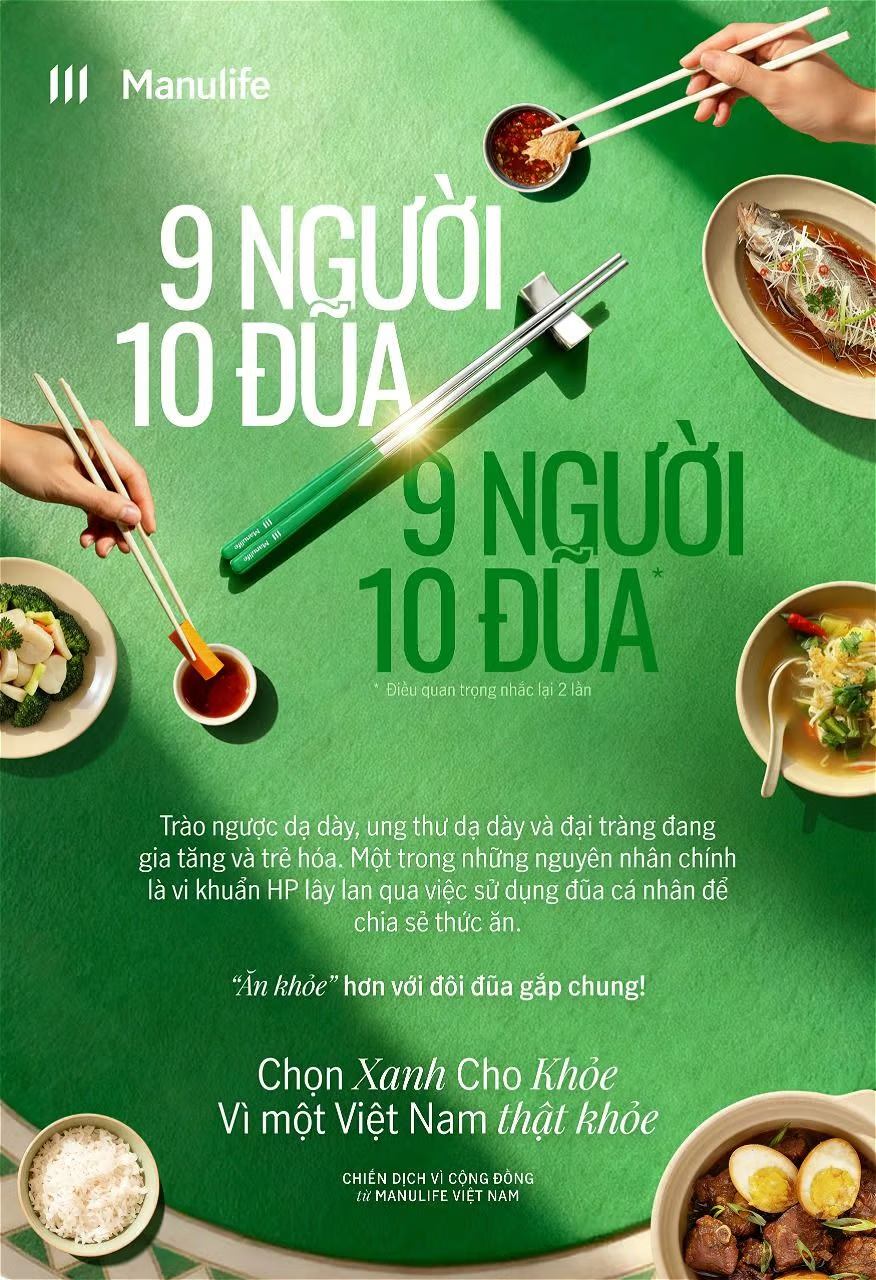
In Vietnamese culture, family meals are moments of sharing, yet they can also be a common point of exposure to the H. pylori bacteria — a leading cause of gastritis. Manulife aims to transform this familiar moment into an awareness touchpoint through a visual that is simple enough for anyone to understand at first glance: 9 pairs of eating chopsticks and 1 pair of serving chopsticks. The visual metaphor of “9 people – 10 chopsticks” reveals a relatable insight: by simply adding one pair of serving chopsticks, families can keep their warm dining traditions intact while still protecting each other’s digestive health. It’s a small action that doesn’t disrupt cultural habits but creates meaningful impact on health safety.
To turn the message from “knowing” into “seeing” and “doing immediately", the chopstick visual identity is fully leveraged across all campaign touchpoints:
At awareness touchpoints, the image of 9 people and 10 chopsticks—with one being the serving pair—appears on OOH, social content, POSM, and digital visuals, ensuring instant recognition and easy recall.
At engagement touchpoints, the chopsticks become interactive experiences: from mall installations featuring the Manubear mascot with oversized serving chopsticks, to a giant‑chopstick claw game where players win their own serving chopsticks, and even real serving chopsticks and a lucky spin minigame placed at Manwah restaurant tables where dining habits naturally occur and can be changed most effectively—all reinforcing the message by letting people interact directly with the concept. All elements are tied together through the theme song “Đũa Gắp Chung” (The Serving Chopsticks), which uses upbeat sounds and the familiar ambiance of Vietnamese family meals to create emotional resonance and encourage natural sharing across social media and everyday life.
This creative idea aims for one clear goal: whenever Vietnamese people think of mealtime, they remember that adding just one extra pair of chopsticks is adding one more way to protect each other.
CONNECTION PLAN
The campaign followed a digital-first, journey-based approach, ensuring that each activity reinforced the next and collectively drove behaviour change.
Awareness – Start with real health stories: Authentic moments from free H. pylori screenings — reaching 8,000 residents — were transformed into compelling PR and social content. These real experiences built credibility and initiated conversations around digestive health.
Engagement – Make the idea visible and shareable. Mall activations attracted 4,984 participants through interactive experiences designed for social sharing. Activities like the Big Chopsticks Game and the personalised quiz “How old is your stomach?” generated organic UGC and online discussions.
Behaviour – Embed the habit where it matters most. The partnership with Manwah restaurants allowed 2,786 diners to encounter the message directly at the table through POSM, QR codes, mini-games, and photo zones — turning awareness into immediate action.
Advocacy – Sustain and scale: The AI-powered Green Radio platform enabled 6,380 participants to create personalised wellness-reminder songs for loved ones, turning health messages into emotionally shareable content.
Meanwhile, trained wellness ambassadors and VYPA’s nationwide network amplified verified health information across digital and community channels.
Together, these interconnected touchpoints transformed a simple utensil into a nationwide conversation — driving awareness, shaping behaviour, and advocating for preventive health at scale.
OBJECTIVE-BASE KPI